
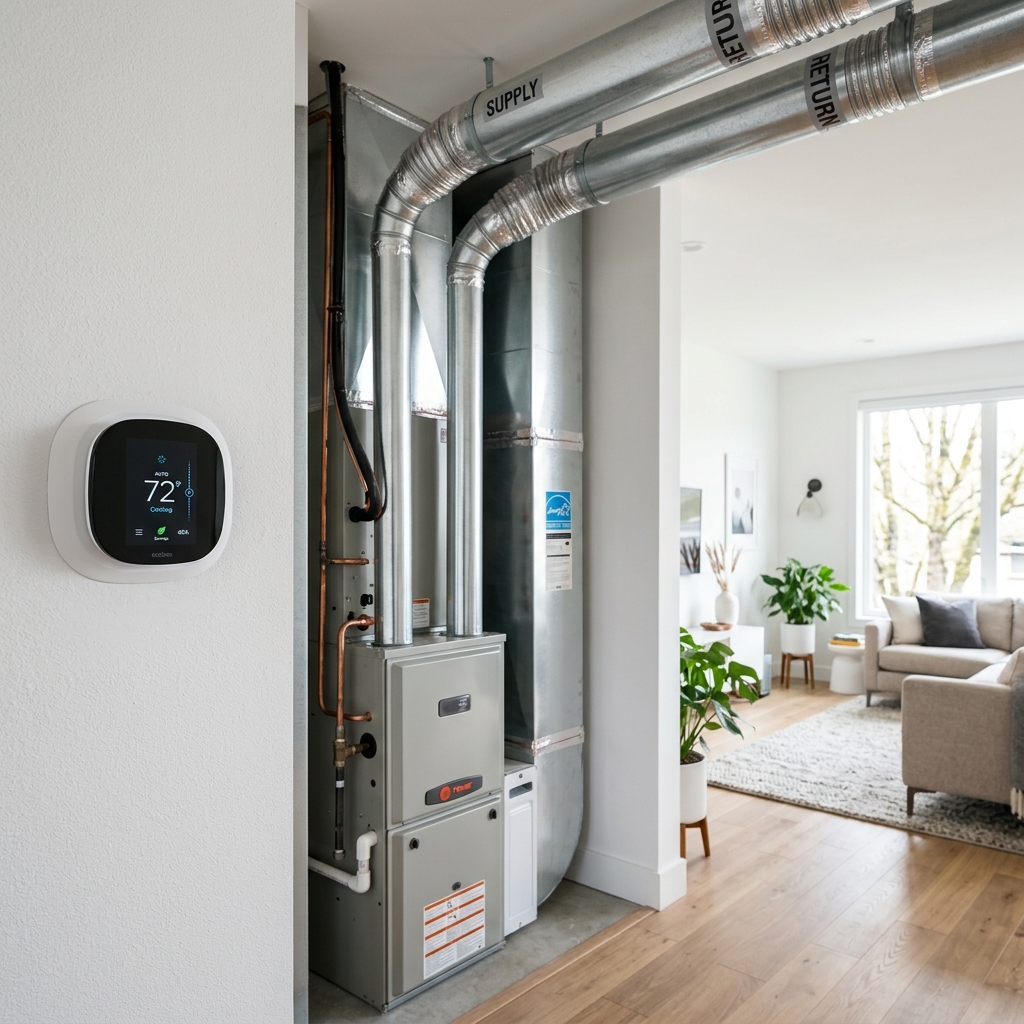
Your HVAC system is typically the largest energy consumer in your home, accounting for nearly half of your total energy costs. When your ductwork is clogged with dust, debris, and buildup, your system has to work significantly harder to maintain your desired temperature — and that extra effort shows up directly on your energy bills.
How Dirty Ducts Waste Energy
The U.S. Department of Energy estimates that 25 to 40 percent of the energy used for heating or cooling a typical home is wasted. A significant portion of that waste comes from duct system inefficiencies. When dust and debris coat the inside of your ductwork, they create friction that restricts airflow. Your HVAC system compensates by running longer and harder, consuming more electricity and increasing wear on expensive components like the compressor and blower motor.
The Real-World Impact on Your Bills
- Restricted airflow forces your system to run longer cycles, increasing electricity consumption
- A dirty evaporator coil reduces cooling efficiency by up to 30%
- Clogged return ducts create negative pressure that pulls unconditioned air through gaps and leaks
- Blocked supply ducts create uneven temperatures, leading homeowners to set thermostats lower than necessary
- Excessive runtime accelerates component wear, leading to premature (and expensive) system failure
Money Saver: Most homeowners who have their ducts professionally cleaned report noticeable improvements in airflow and temperature consistency within the first 24 hours. Many see a measurable reduction in their energy bills within the first billing cycle.
Beyond Cleaning: Duct Sealing
In many DFW homes, especially those built before 2000, ductwork connections have loosened over time, creating leaks that allow conditioned air to escape into your attic or crawl space. Our technicians inspect for these leaks during every cleaning and can recommend sealing solutions that further improve your system's efficiency.
When to Schedule for Maximum Savings
The best time to clean your ducts for energy savings is before peak cooling or heating season. For Dallas-Fort Worth homeowners, we recommend scheduling in early spring (before the A/C kicks into high gear) or early fall (before heating season). This ensures your system operates at peak efficiency when it matters most.