
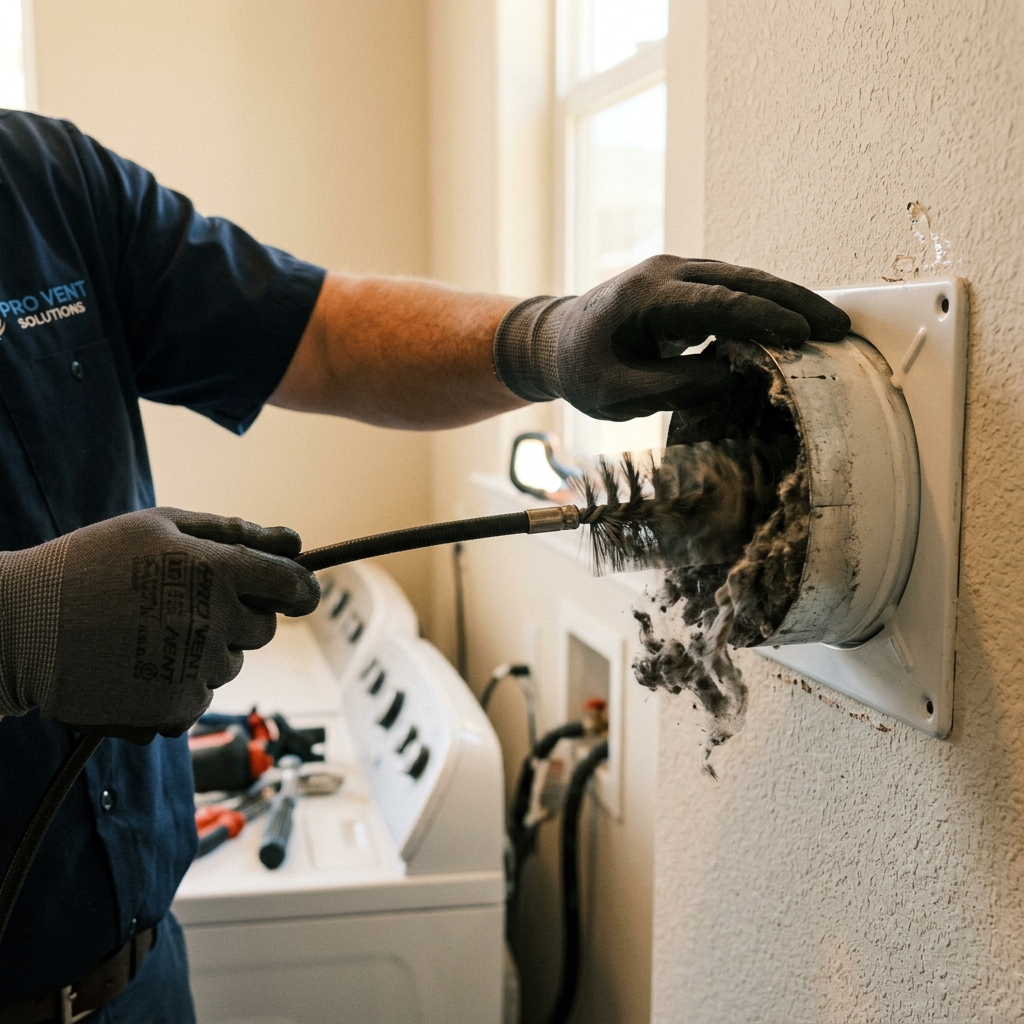
According to the U.S. Fire Administration, clothes dryers are responsible for approximately 2,900 home fires each year, resulting in an estimated 5 deaths, 100 injuries, and $35 million in property loss. The leading cause? Failure to clean the dryer vent.
How Dryer Vent Fires Start
Every time you run your dryer, small fibers and lint pass through the lint trap and accumulate in the vent duct. Over time, this buildup restricts airflow, causing the dryer to overheat. Lint is extremely flammable — when it reaches ignition temperature inside a clogged vent, a fire can start and spread rapidly through the ductwork and into your walls.
Warning Signs of a Clogged Dryer Vent
- Clothes take more than one cycle to fully dry
- The dryer or laundry room feels unusually hot during operation
- A burning smell when the dryer is running
- The outside vent flap doesn't open properly when the dryer is on
- It has been more than a year since your last professional dryer vent cleaning
- Visible lint accumulation around the dryer hose connection
Prevention Steps You Can Take Today
Clean the lint screen after every load — but that's just the beginning. The lint trap only catches about 75% of the lint produced during a drying cycle. The rest travels into the vent duct, where it accumulates over months and years. Professional dryer vent cleaning removes this hidden buildup that you simply can't reach on your own.
Important: Never use a dryer without the lint trap in place. Also, avoid using foil or plastic transition ducts — they can sag, trap lint, and are more likely to ignite. Use rigid or semi-rigid metal ducting instead.
How Often Should You Clean Your Dryer Vent?
We recommend professional dryer vent cleaning at least once per year for most households. Families that do 5+ loads per week, have long vent runs (over 15 feet), or use multiple 90-degree elbows in their vent path should consider cleaning every 6–9 months.
Our technicians use professional-grade rotary brush systems and compressed air to thoroughly clean the entire vent run from the dryer connection to the outside exhaust. We verify proper airflow after every job and show you exactly what we removed.